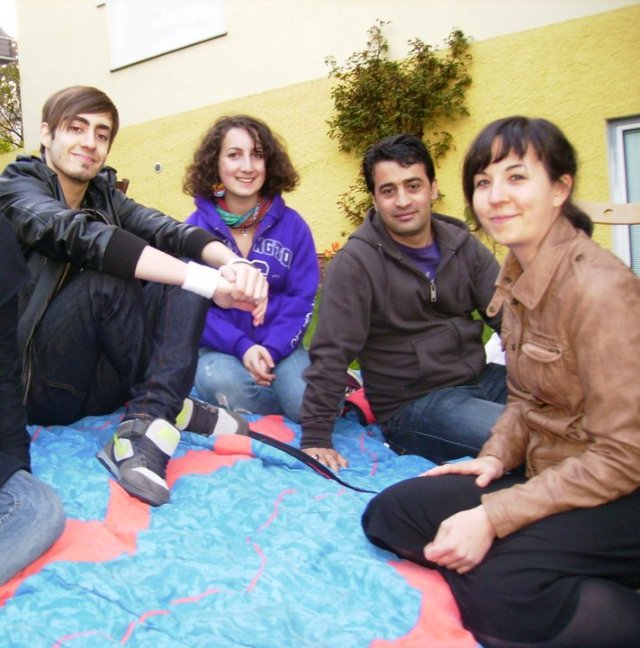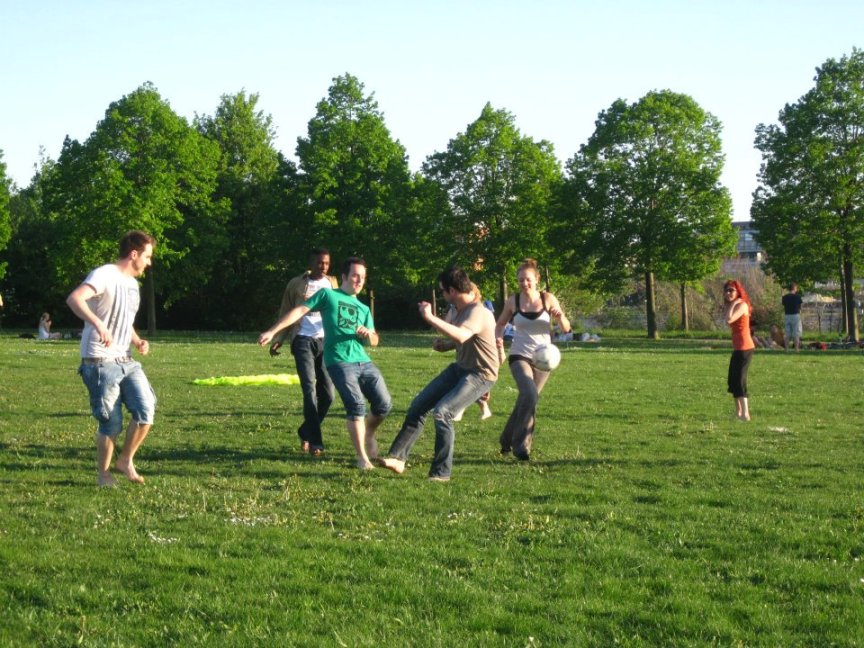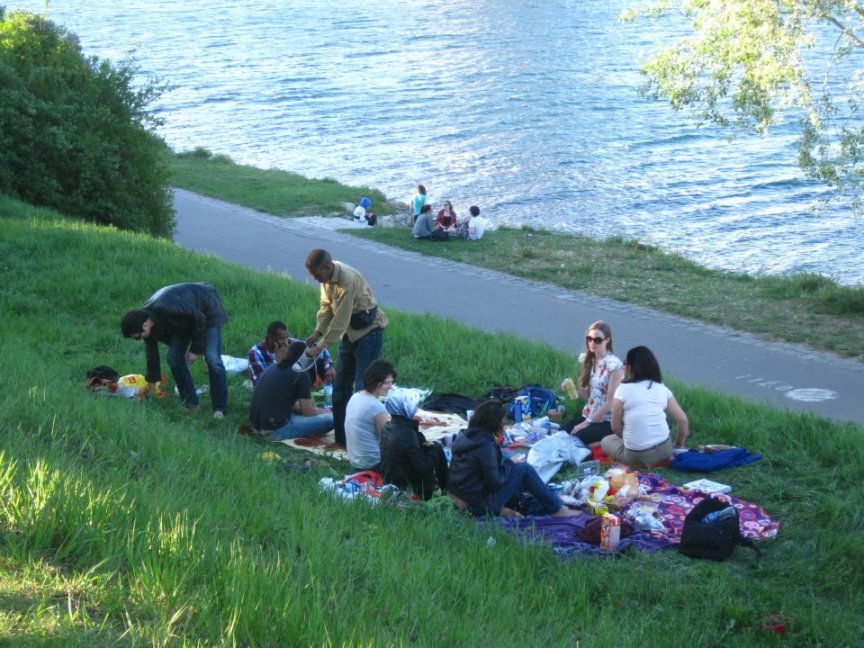


ZUSAMMEN LEBEN is a program from Grenzenlos since 2010 and it’s done in cooperation between Grenzenlos and Interface (funded by the city of Vienna- Ministry of Integration and Culture - MA 17).
How did all started: In 2009, Grenzenlos saw the need to develop more local programs in order to have a more direct impact in the Austrian community as well as the communities living in Austria. Through the mobility programs, Grenzenlos has gained and developed strategies as well as methodologies to monitor and support participants going abroad or coming to Austria. Taking this experience into account, a team of volunteers from Grenzenlos got together and brainstormed, on how a mentoring system could support immigrants in their social integration process. A concept was developed and Grenzenlos contacted national and international institutions, to receive support and funding. This is when the cooperation with Interface Vienna started.
Interface is an institution in Vienna, who supports cross-social integration of children, young people and adults with a migrant background through their education, information and counselling measures.
Project Launch: the project was launched on the 19th of February 2010, after a concept adaptation was made by Interface and Grenzenlos. The program consists of Mentors (which are Austrian volunteers or volunteers who have been leaving in Austria for a long period of time) and the Mentees (who are Interface clients with migration background). Most of the immigrants have been former refugees coming from countries like Afghanistan, Iraq, Chechnya, Iran, Congo and Nigeria, among others.
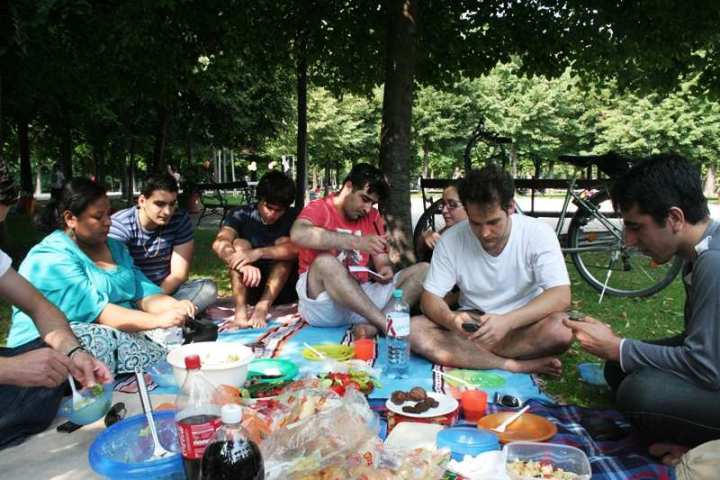
Goal of the program: to bring together 15 mentees and 15 mentors, for the period of around 7-8 months, to get to know each other, exchange their culture and that the mentee has a personal support, so that the integration process becomes easier. The mentors support the mentees, through personal contact, sharing tome together in free-time, language support, etc.
Structure of the program
The stakeholders in ZUSAMMEN LEBEN are Mentees, Mentors, Social Workers from Interface, ZL-Coordinator and Team from Grenzenlos as well as Supervision-Coordinator (in case the mentoring role becomes too difficult for the volunteers). Interface is in charge of selecting 15 mentees and their direct supporting persons are the social workers from Interface. Grenzenlos is in charge of selecting 15 mentors, and the ZL-Coordinator is the one in charge of supporting the mentors.
Before the mentors and mentees meet, the mentors receive 2-day training seminar from the Grenzenlos ZL-Team in March on subjects like: Expectations and their roles as Mentors, Intercultural Communication & Conflict Management, Migration Law, Racism, Gender, Motivational Support, etc.
After this seminar, the mentees and mentors meet for the first time in April in a “Kennen- Lernen-Abend” to get to know each other. A week after they are all invited to a Kick-Off day where they have the opportunity to get to know each other better, they get to share their expectations and wishes and doubts are clarified. In this seminar Grenzenlos does the Matching process and at the end one mentee has one mentor.
After this seminar the mentor and mentee (the pairs) meet during their free-time. The pairs decide by themselves how, when and where they want to meet. Grenzenlos (ZL-Coordinator & Supervision) supports them in case they need any advice, or to resolve conflicts. In November there is an Evaluation- Day, where Grenzenlos collects experiences and feedback from all the participants and the program is then officially over. If mentees and mentors want to keep meeting, it’s up to. They decide if and how the relationship should develop.
The mentors support the mentees in their language learning process, clarify Austrian rules and way of living and thinking, mentors support the mentees in case of problems, accompany them on meetings that have to do with the visa and work/study, give them advice and information on what they can do in Austria and what are their rights, the mentees are able to meet new people though the mentors social network and more.
Impact of Zusammen Leben: we are currently starting our 4th ZL year and we see how the program develops and grows in the Viennese community. On the one hand the mentees get to know Austrians and are not isolated or they are able to bond with the locals. The German language and their understanding of how the country works, improves. Some have had trauma from their refugee past and are able to share it with the mentors. The mentors on the other hand, get to a new culture and their own; they are faced with the realities (positive and negative) of immigration law in Europe and become more critical and aware of the current Migration policies. Not only the mentors and mentees, but as well the friends and family of the mentors and the mentees, can learn and take advantage of the fruits of this program. Last but not least, in some cases, long lasting friendships are built between people from different cultures that are sharing the same living place and learn not only to live together but to be together as one.
My experiences with Zusammen Leben – Magdalena Lentsch
Thanks to the fact that I was part of Zusammen Leben I got to see my own culture/ identity through new lenses. Claude-Willy helped me to question the Austrian society in new ways I would not have considered before. Those questions were: What is my role in the Austrian society, how do I have an impact on my community or how do I interact with people who are not born in Austria? The intercultural exchange in your own country provokes that one, becomes more aware of one’s identity and role within society. With time, in many cases, a friendship formed, which implies that the personal and individual contact became central and therefore the categories of asylum seeker, refugee or being “Austrian” got questioned or at least less important. The common things we share are ostensible, the differences ulterior.
Zusammen Leben helped me to open my eyes for many processes which are taking place within “my own” country which I have not noticed for a long time or which I was not part of.
Furthermore Zusammen Leben can be seen as a springboard so as to network and create relations with other like-minded people to start initiatives or projects. Asylum seekers and Austrians can function as each other’s facilitators in order to realize some ideas, helping out via one’s own network/ knowledge etc. Claude-Willy for example is subsidizing an NGO in Burundi for several years now and I tried to support him via opening him access to my Austrian social network in order to find a bigger circle of backer. Zusammen Leben can be an opportunity to decrease eventually existing stereotypes/ prejudices within one’s circle of acquaintances simply though making the project to a topic of conversation.
I especially enjoyed the encounter of two coequal persons in Zusammen Leben. Claudy-Willy mentioned during our “personal evaluation” that he savored the fact that he got the chance to get to know so many people from so different places all over the world and that this opportunity fortified his curiosity to get to know new people and new cultures. I think that this is the actual aim of the program: to pique people’s curiosity, to get to know each other and learn from each other instead of judging other cultures we do not even know about. While in politics people with migration background often experience discrimination, this program is a statement against discrimination of any kind and pro equal opportunities and mutual respect.
My relation to Claude-Willy is these days a friendship one. Our different experiences in terms of cultural, social and political contexts are one aspect of our relationship, but not the central one. We got to know each other’s friends, family and acquaintances. I enjoyed being introduced into his living environment as he enjoyed getting to know my parents, brother and grandparents. Equally for him as for me our relationship helped us to get insight of another’s “culture”, but at the same time – as important – to stay curious about oneself and others and question and challenge both sides.